


Heavy rain can cause road conditions to change quickly. Visibility may be reduced, roads may become slippery, and standing water or local flooding may occur along the route. In these situations, drivers should remain cautious and adjust their driving to the actual road and weather conditions. Careful observation, proper vehicle control, and appropriate handling are essential for staying safe in heavy rain. To help drivers stay prepared and reduce risks, ISUZU Vietnam recommends the following six safety tips.
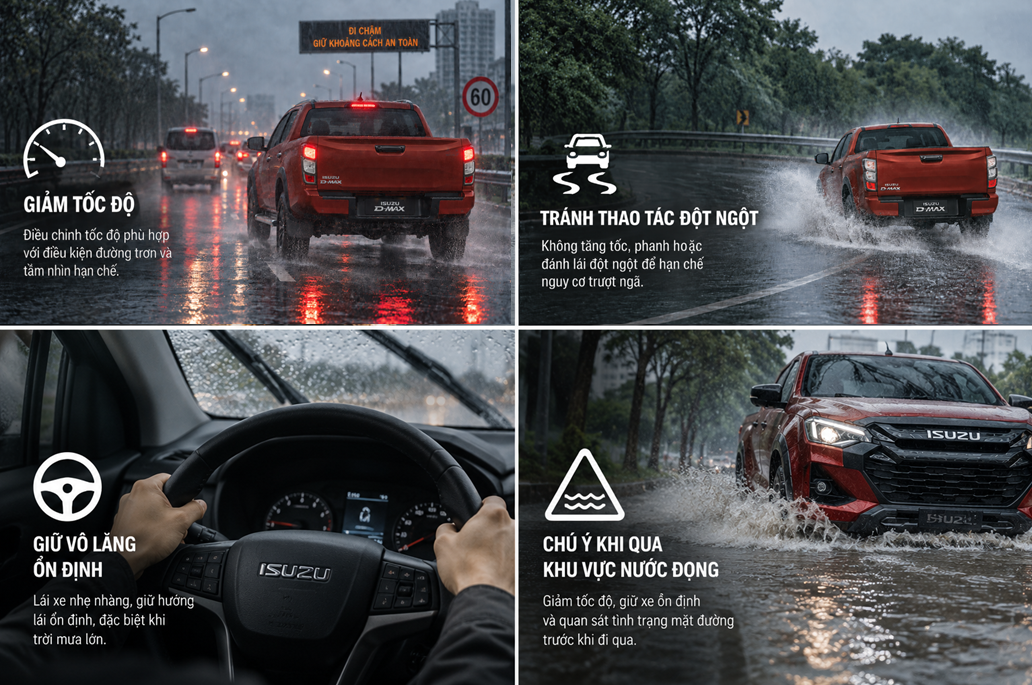
1. SLOW DOWN AND DRIVE CAREFULLY
When it rains, roads become more slippery and visibility is reduced. Drivers should slow down according to the actual conditions and avoid sudden acceleration, braking, or steering.
Standing water can reduce contact between the tires and the road, causing hydroplaning and making the vehicle more difficult to control.
When driving in heavy rain, keep the steering wheel steady and make smooth movements, especially when passing through standing water or when road conditions change suddenly.
If the vehicle begins to lose grip, stay calm, keep the steering direction steady, and gradually slow down. Avoid hard braking or sudden steering.
2. MAINTAIN A SAFE DISTANCE FROM THE VEHICLE AHEAD
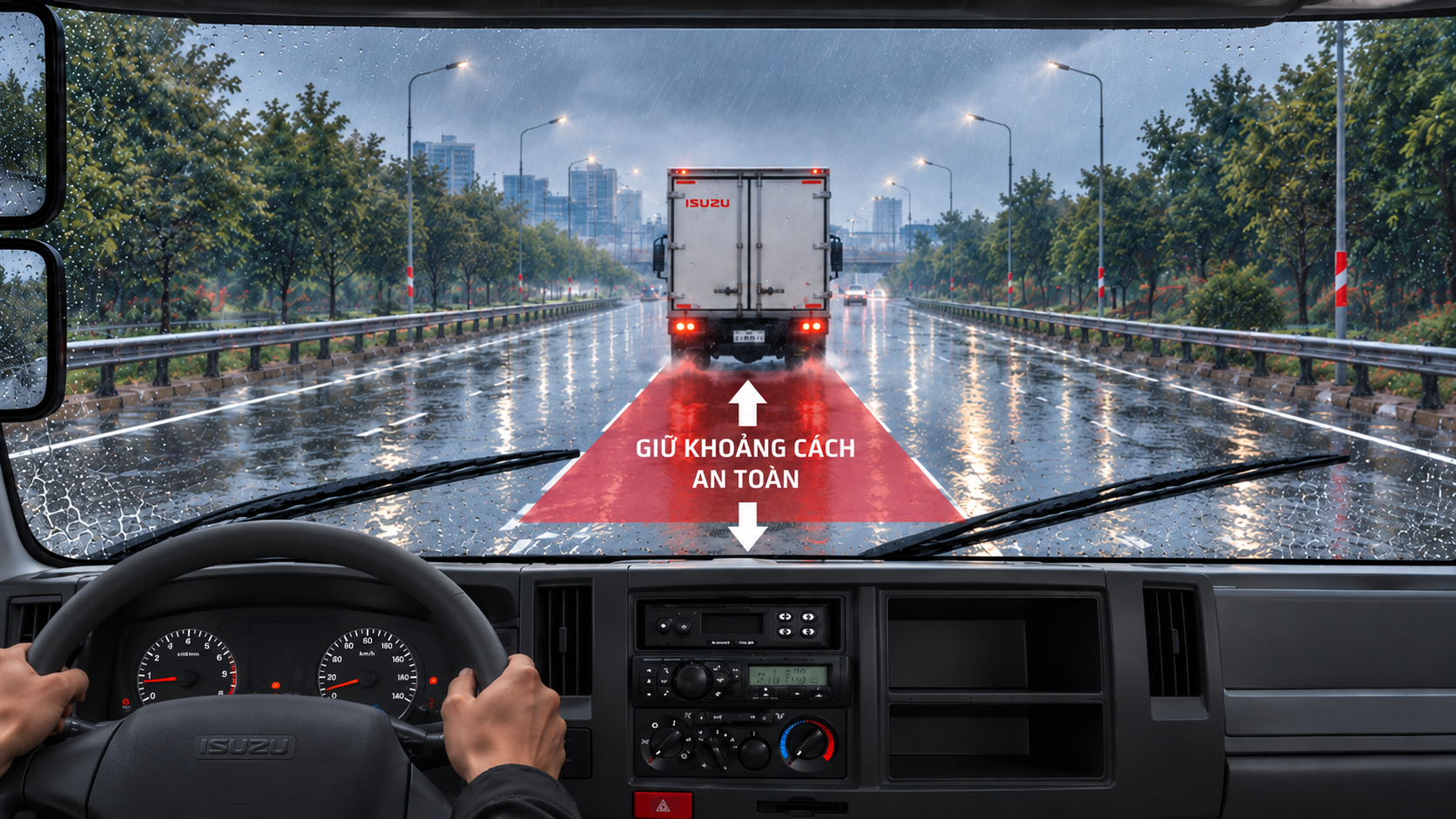
In heavy rain, unexpected situations may occur at any time. Vehicles ahead may suddenly slow down, or there may be standing water, obstacles, or flooded sections of road.
Reduced visibility and slippery roads also mean that drivers need more time and distance to react. Therefore, increase the distance from the vehicle ahead instead of maintaining the same distance used in dry conditions.
Maintaining an appropriate distance gives the driver more time to observe, slow down, and handle situations safely. Therefore, maintaining this distance requires particular attention, as a vehicle’s operating characteristics can change depending on its load.
3. MAINTAIN CLEAR VISIBILITY
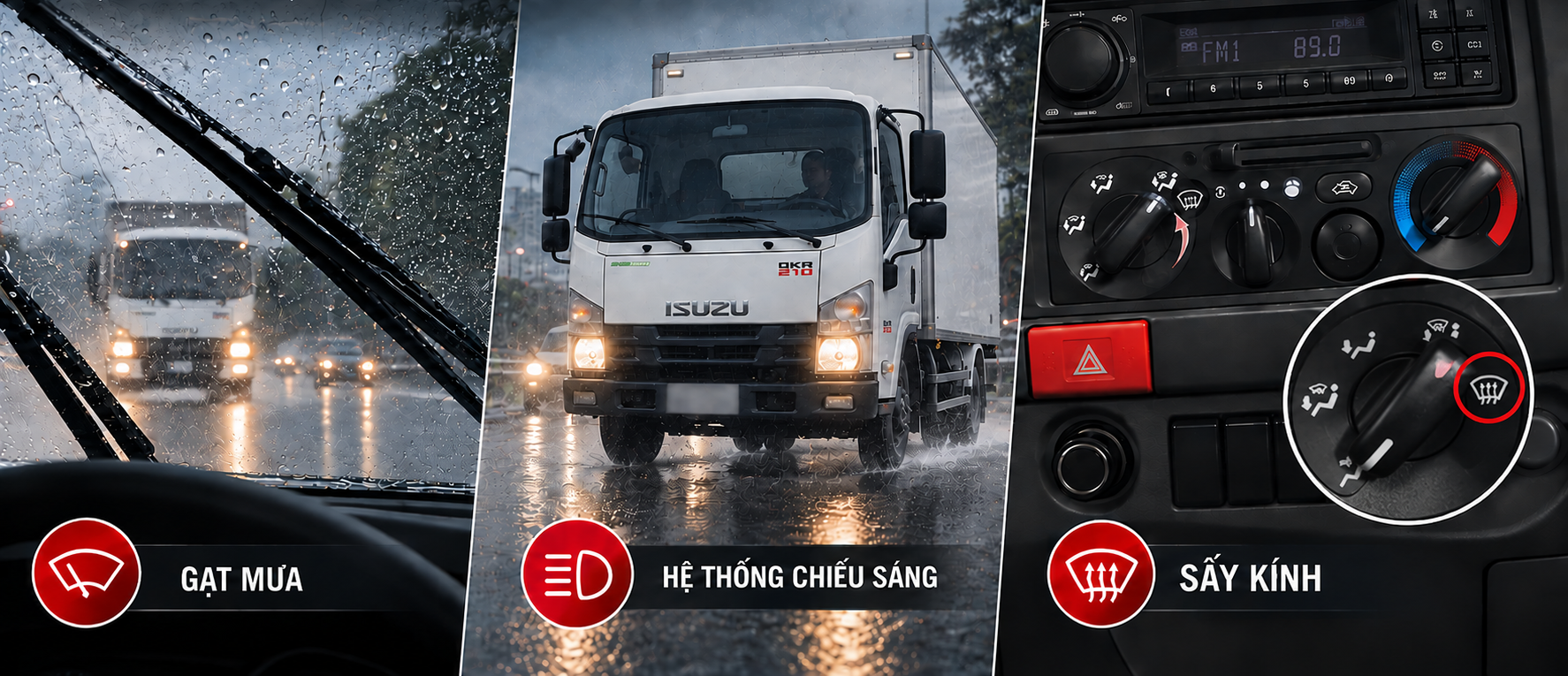
In heavy rain, it is important to see the road clearly and to ensure that other road users can see your vehicle. Drivers should use the vehicle’s equipment properly to maintain visibility.
Windshield wipers: Adjust the wiper speed according to the rainfall to keep the windshield clear. If the wipers cannot clear the windshield and visibility is significantly reduced, slow down.
Lighting system: Use the appropriate lights when visibility is poor. This helps you see the road and makes your vehicle easier for other road users to notice in bad weather.
Window defogging: High humidity and temperature differences may cause the windows to fog up. Use the vehicle’s defogging function when necessary to maintain a clear view.
If visibility remains insufficient even after using these systems, do not continue driving and find a safe place to park.
4. IF THE RAIN IS TOO HEAVY, STOP AT A SAFE LOCATION
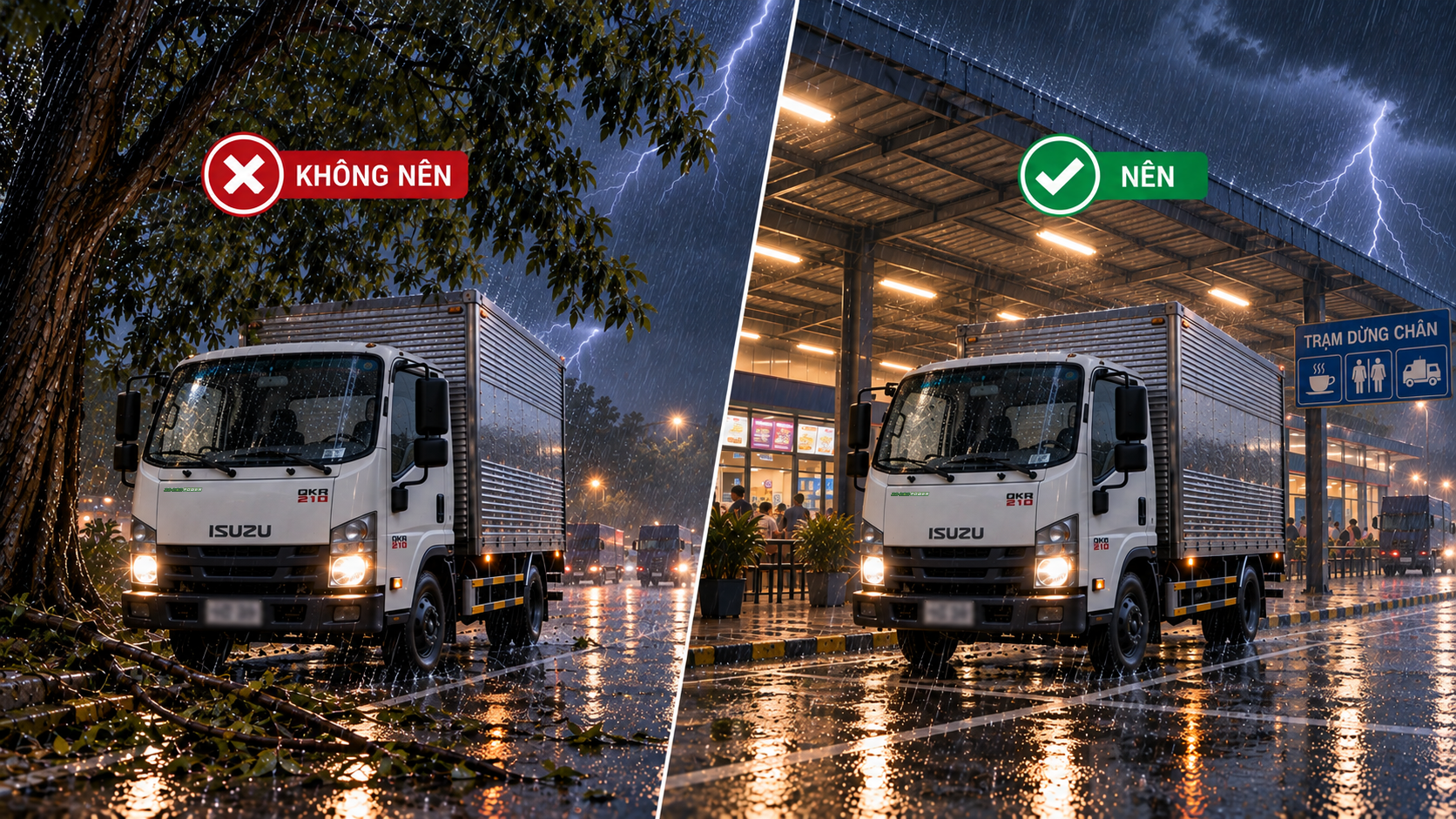
If heavy rain prevents you from clearly seeing the lane, nearby vehicles, or the road ahead, continuing to drive may increase the risk of an accident. Slow down and find a suitable location to stop safely until visibility improves.
Heavy rain may also come with thunderstorms and strong winds. Avoid stopping under large trees, billboards, temporary structures, utility poles, or power lines. These objects may break, collapse, or fall during severe weather and could endanger the vehicle and its occupants.
Also avoid low-lying areas or locations that may flood quickly. Choose a legal and stable stopping place that does not prevent traffic and reduces the risk of flooding or falling objects.
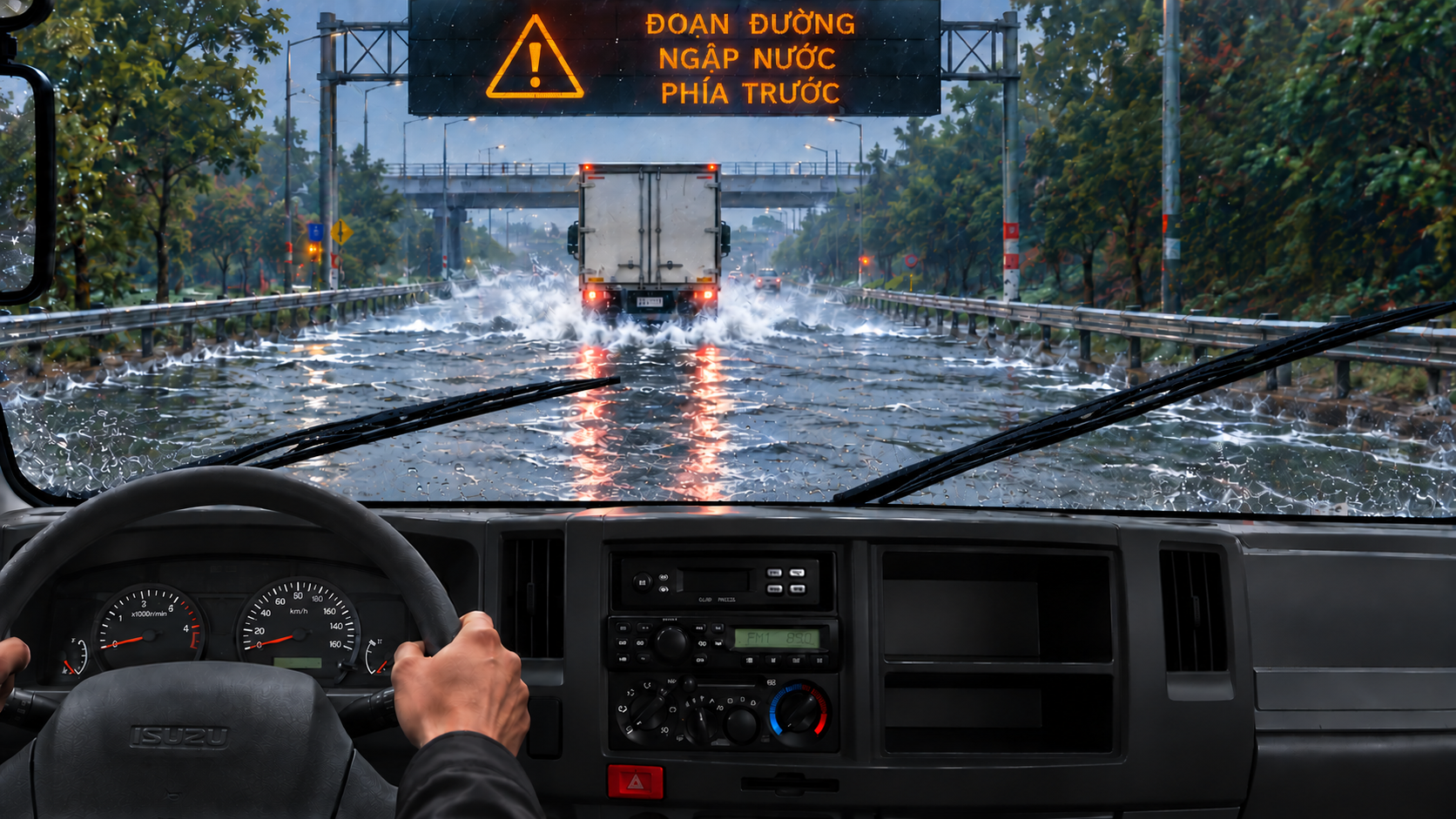
5. IF THE ROAD IS FLOODED, USE AN ALTERNATIVE ROUTE
When you see a flooded section ahead, use an alternative route and avoid entering the flooded area whenever possible.
When no practical alternative route is available and proceeding is necessary, first confirm that the water depth and road conditions can be clearly assessed and are safe and within the vehicle’s specified operating limits. Only after confirming these conditions, proceed slowly and steadily, avoiding sudden acceleration, deceleration, or steering.
Do not enter the flooded area if the water depth or road condition cannot be clearly determined, or if you cannot confirm that the vehicle can pass safely. Water entering the engine may cause serious damage due to hydrolock.
IMPORTANT: If the engine stops while the vehicle is in a flooded area, do not attempt to restart it.
Restarting the engine after water has entered may cause more serious damage. Prioritize safety and contact the nearest authorized ISUZU Dealer or a roadside assistance provider for support.
6. CHECK THE VEHICLE AFTER DRIVING IN HEAVY RAIN
After driving in heavy rain, especially through standing water or flooded areas, do not assume that the vehicle is safe simply because it continues to operate normally.
Check the vehicle’s exterior condition and pay attention to any warning lights, unusual noises, vibrations, changes in steering feel, or other abnormal signs.
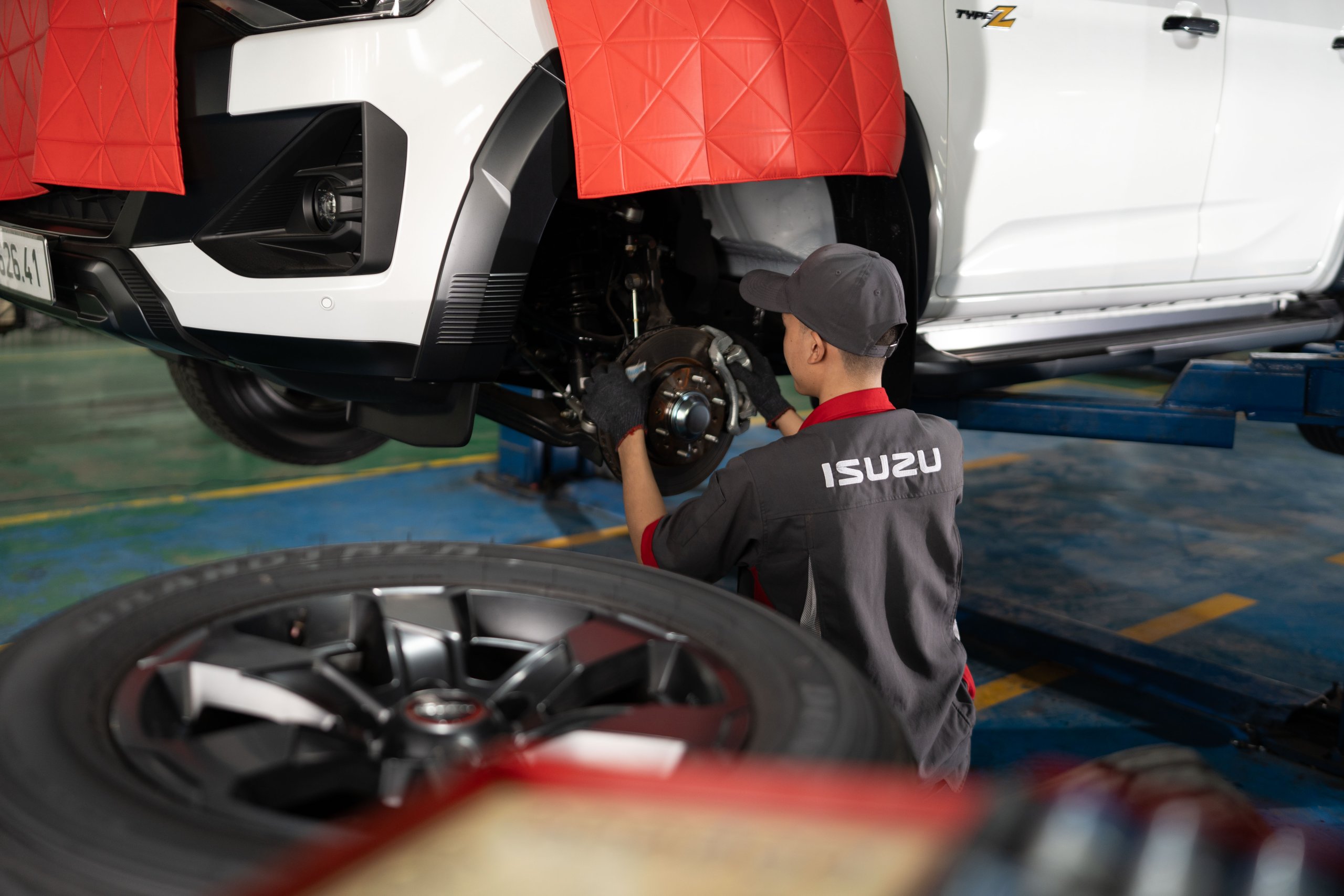
Pay particular attention to the braking system.
Water may affect the braking system and reduce braking performance. After passing through water, find a safe location, slow down, and check brake response at low speed. Apply the brakes lightly several times to help dry the brakes and confirm braking performance.
If braking performance does not return to normal or any abnormal condition remains, do not continue driving. Stop the vehicle at a safe location and contact the nearest authorized ISUZU Dealer or a roadside assistance provider for support.
Weather is beyond the driver’s control, but speed, following distance, visibility, and response to road conditions can all be managed. Adjusting your driving to heavy-rain conditions helps protect vehicle occupants and reduce risks during the journey.
After driving in heavy rain or through a flooded area, if you notice any abnormal signs or have concerns about the vehicle’s condition, please have the vehicle inspected at an authorized ISUZU Dealer for added peace of mind and safe vehicle operation.
Customers can book a vehicle inspection in one of the following ways:
- Contact the nearest Authorized ISUZU Dealer: https://isuzu-vietnam.com/dai-ly-xe/
- Book a maintenance or repair appointment through the ISUZU CARE application:
– ISUZU VIETNAM –


